
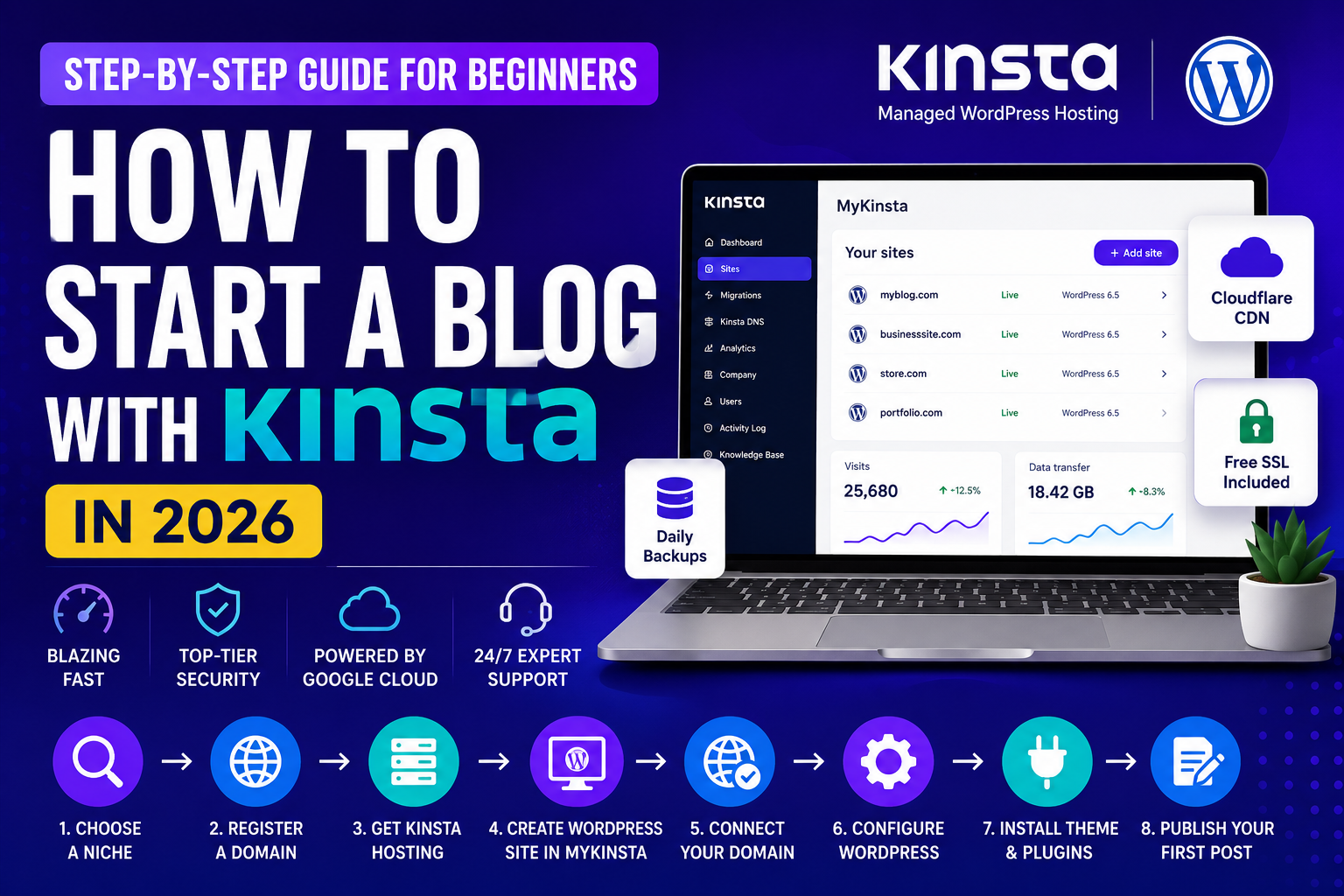

If you want to start a fast, secure, and professional WordPress blog, Kinsta is one of the managed WordPress hosting platforms worth considering. Unlike traditional hosting providers that require you to manage cPanel, server configuration, caching, and many technical tasks yourself, Kinsta provides a centralized MyKinsta dashboard for managing your WordPress websites.
In this guide, I’ll show you how to start a blog with Kinsta step by step. We’ll cover everything from choosing a niche and domain name to purchasing Kinsta hosting, adding your domain, installing WordPress, configuring your new site, and publishing your first blog post.
This guide has also been updated for 2026, so the setup process reflects Kinsta’s current MyKinsta interface and WordPress hosting features.
Kinsta is a premium managed WordPress hosting provider designed for bloggers, businesses, WooCommerce stores, agencies, and high-traffic websites. Its infrastructure uses Google Cloud Platform and includes features such as Cloudflare-powered CDN, edge caching, automatic backups, free SSL certificates, managed security, and staging environments.
How to Start a Blog With Kinsta: 9 Steps
Starting a WordPress blog on Kinsta is much easier than it may initially seem. You don’t need to manually install a web server or configure cPanel. Kinsta provides the tools you need through MyKinsta.
- How to Start a Blog With Kinsta: 9 Steps
- #1 Choose a Niche for Your Blog
- #2 Register a Domain Name
- #3 Choose a Kinsta WordPress Hosting Plan
- #4 Create Your Kinsta Account
- #5 Create a WordPress Site in MyKinsta
- #6 Connect Your Domain to Kinsta
- #7 Configure Your WordPress Website
- #8 Install a Fast WordPress Theme and Essential Plugins
- #9 Publish Your First Blog Post
- Why Choose Kinsta for a WordPress Blog?
- Kinsta vs Traditional cPanel Hosting
- Does Kinsta Install WordPress Automatically?
- Is Kinsta Good for a New Blog?
- What to Do After Starting Your Kinsta Blog
- Frequently Asked Questions About Starting a Blog With Kinsta
- Conclusion: Start Your Blog With Kinsta
- Next Step: Grow Your Blog
#1 Choose a Niche for Your Blog
Before purchasing hosting or registering a domain, decide what your blog will be about. This is called your blog niche.
Your niche should ideally combine three things: something you understand or enjoy, something people are searching for, and a topic that gives you opportunities to monetize your content.
For example, you could create a blog about WordPress, blogging, personal finance, technology, travel, fitness, digital marketing, software, or a specific hobby.
If you need help choosing a profitable topic, check out our guide on how to choose a profitable blog niche.
#2 Register a Domain Name
Your domain name is the web address people will use to visit your blog, such as example.com.
Try to choose a domain that is short, easy to remember, easy to spell, and relevant to your blog topic. A .com domain is usually a good choice when it is available.
You can register your domain through a domain registrar such as Namecheap or GoDaddy. You don’t have to purchase your domain from Kinsta to use Kinsta hosting.
If you already own a domain, you can simply connect it to your Kinsta-hosted WordPress website later.
#3 Choose a Kinsta WordPress Hosting Plan
Now it’s time to choose your Kinsta hosting plan.
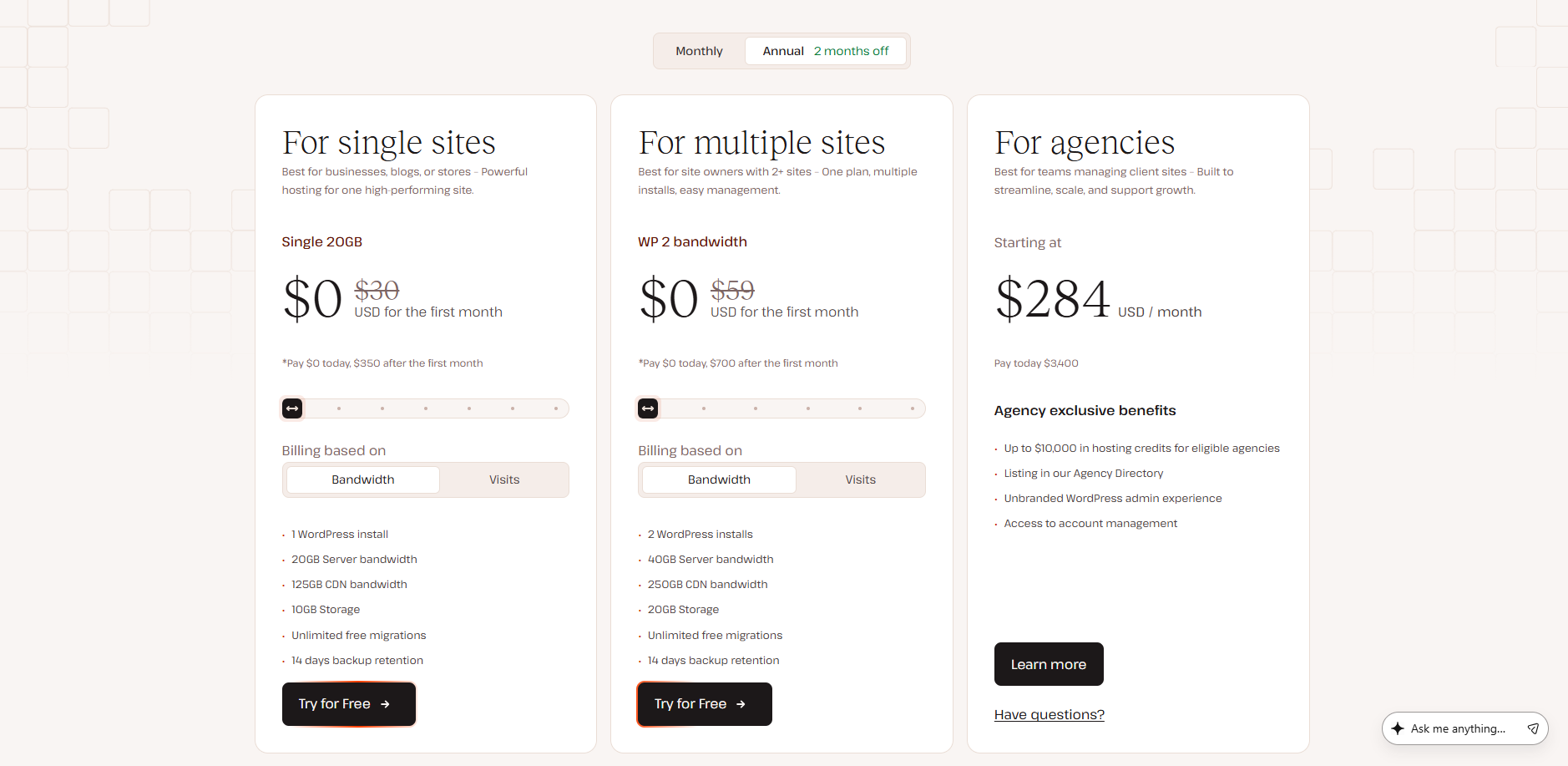
Kinsta offers managed WordPress hosting plans for individual websites, multiple websites, agencies, and larger businesses. Current plans can be based on either monthly visits or server bandwidth, depending on the plan you choose.
For a new blog, the entry-level single-site plan is generally the most appropriate starting point. Kinsta’s current pricing page lists the Single 20GB plan at $35 per month or $30 per month when billed annually, with promotional offers potentially available. The plan includes one WordPress install, 10GB of storage, 20GB of server bandwidth, 125GB of CDN bandwidth, unlimited free migrations, and 14-day backup retention.
Always check Kinsta’s current pricing page before purchasing because plan limits, pricing, and promotional offers can change.
Tip: If you’re starting your first blog, don’t pay for a larger plan simply because it offers more resources. You can upgrade later as your traffic and resource requirements increase.
To get started, visit Kinsta.com.
#4 Create Your Kinsta Account
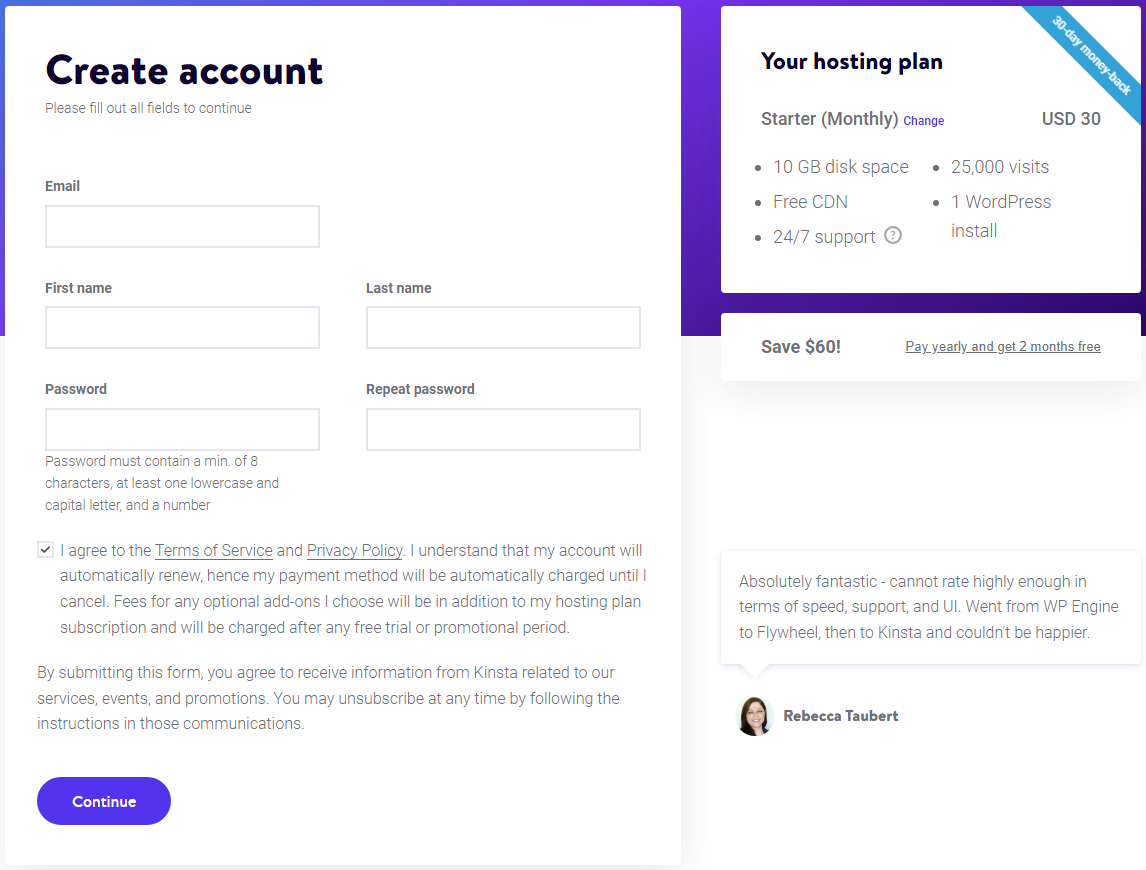
After selecting a plan, create your Kinsta account and enter your billing information.
Follow the registration process and complete the payment for your selected hosting plan. Once your account is ready, you’ll be able to access MyKinsta, Kinsta’s central dashboard for managing your websites, domains, backups, staging environments, analytics, and other hosting features.
#5 Create a WordPress Site in MyKinsta
This is where the old Kinsta setup process has changed significantly.
You do not need to log in to cPanel. Kinsta uses its own MyKinsta dashboard instead of traditional cPanel-based hosting.
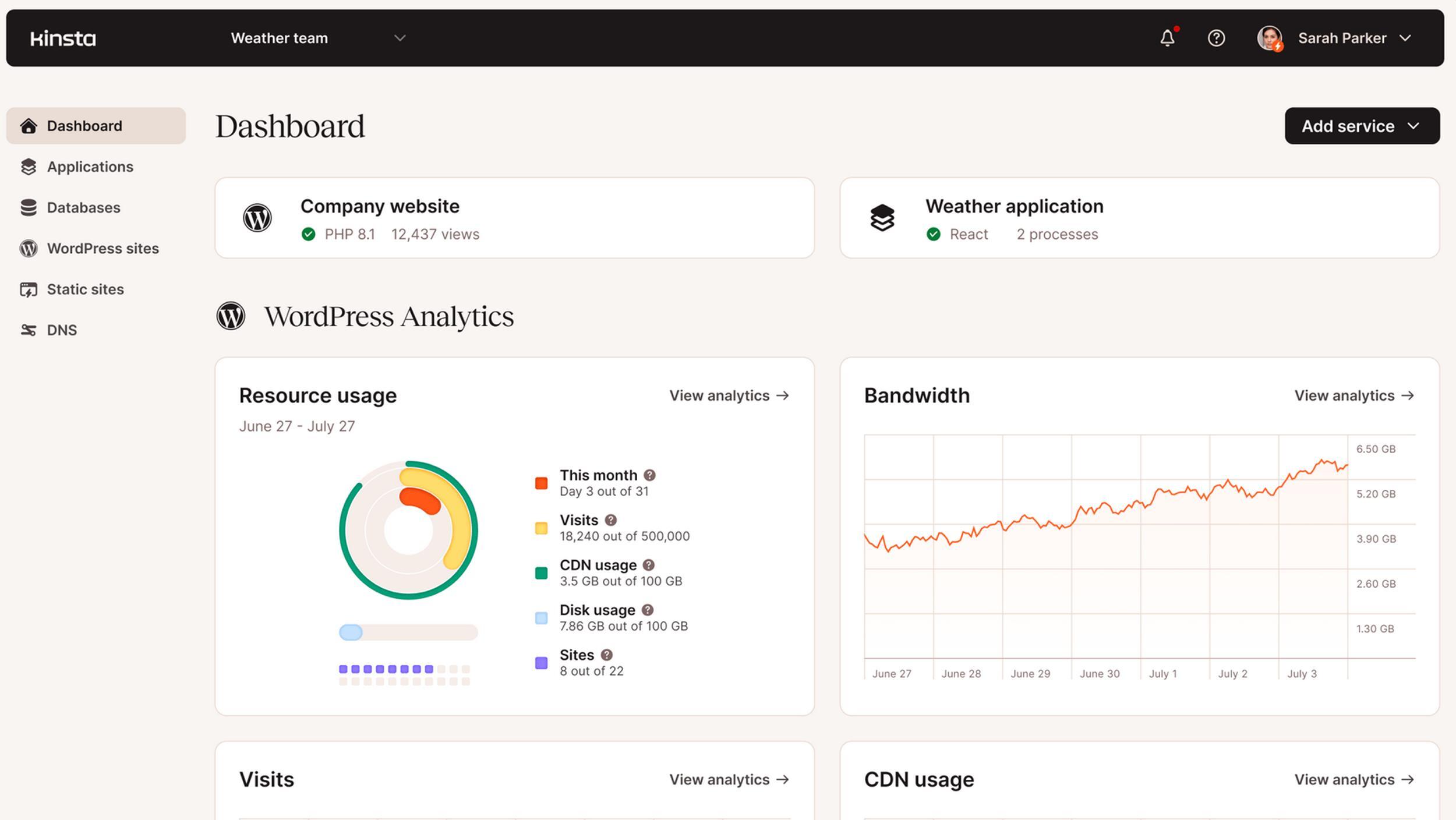
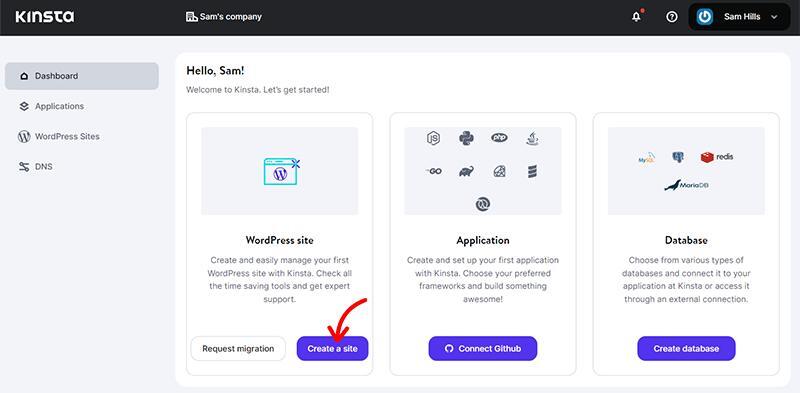
After logging in to MyKinsta, go to your Sites section and choose the option to add or create a new site. Select WordPress as the application and follow the setup wizard.
During the setup process, Kinsta allows you to configure your WordPress installation and choose the appropriate environment. Once the setup is complete, Kinsta creates the WordPress site for you.
This is one of the biggest advantages of managed WordPress hosting: you don’t have to manually install WordPress, configure PHP, set up NGINX, or manage the underlying server.
#6 Connect Your Domain to Kinsta
Once your WordPress site has been created, the next step is connecting your custom domain.
From MyKinsta, open your website and go to the Domains section. Add your domain name and follow Kinsta’s instructions for verifying ownership and pointing the domain to your site.
Kinsta provides the DNS records required to connect your domain. You may need to update DNS records at your domain registrar or DNS provider.
After the DNS changes have propagated and the domain has been verified, you can set it as your site’s primary domain.
Kinsta automatically provides and renews free SSL certificates for custom domains, so your blog can use HTTPS without manually purchasing an SSL certificate.
#7 Configure Your WordPress Website
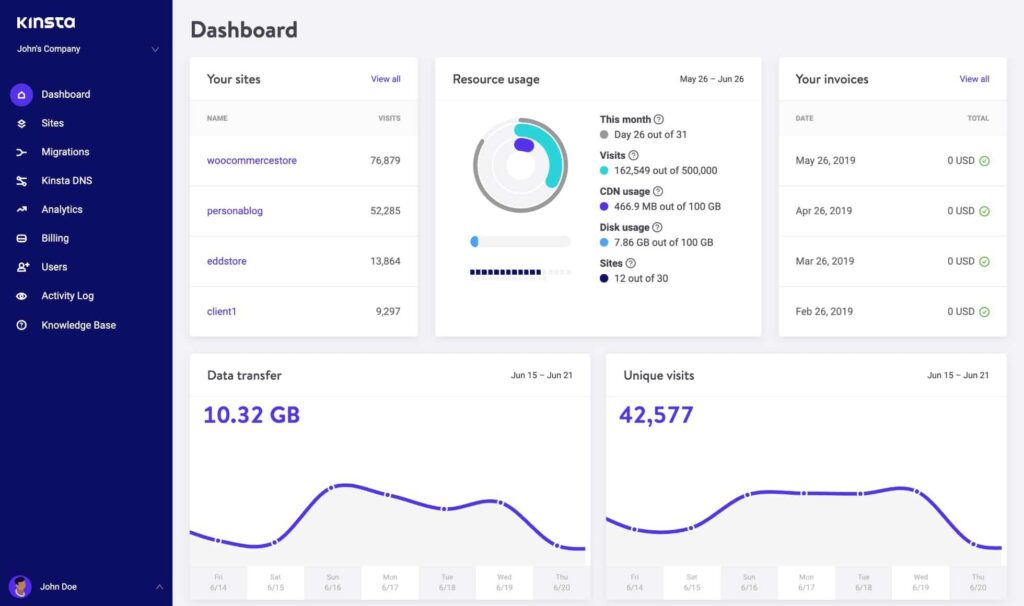
After your domain is connected, open your WordPress dashboard and configure the basic settings for your new blog.
At a minimum, you should configure the following:
- Website title and tagline
- Site language and timezone
- Permalink structure
- Homepage settings
- WordPress administrator account
- Privacy and cookie settings
- Comment settings
For SEO-friendly URLs, a simple permalink structure such as Post name is usually a good starting point for a blog.
#8 Install a Fast WordPress Theme and Essential Plugins
Your hosting provides the infrastructure, but you still need to design and optimize your WordPress website.
Start with a lightweight, mobile-friendly WordPress theme. Avoid installing unnecessary themes and plugins because excessive software can make your website harder to maintain and potentially affect performance.
Depending on your requirements, you may want plugins for:
- SEO
- Contact forms
- Analytics
- Security
- Image optimization
- Affiliate link management
- Backup and migration tools, when needed
Kinsta already provides several performance and security features at the hosting level. Its WordPress platform includes a Cloudflare-powered CDN, managed WAF and DDoS protection, automatic backups, server-level caching, and free edge caching, so you should avoid installing plugins that duplicate functionality unnecessarily.
#9 Publish Your First Blog Post
Your WordPress blog is now ready for content.
Before publishing your first article, create a basic content strategy. Research the questions your target audience is searching for and organize your content around specific topics and search intent.
For each article, try to create genuinely useful content rather than simply writing for search engines. Use descriptive headings, short paragraphs, relevant internal links, original examples, images where appropriate, and clear answers to the reader’s questions.
For SEO, pay particular attention to your title, URL slug, introduction, headings, internal links, image alt text, meta description, and overall topical coverage.
Once your article is ready, proofread it, check the links, preview it on mobile and desktop, and publish it.
Why Choose Kinsta for a WordPress Blog?
Kinsta is more expensive than many entry-level shared hosting providers, but its value comes from managed infrastructure, performance tools, security, and developer-friendly site management.
Here are some of the features that make Kinsta attractive for WordPress bloggers:
- Managed WordPress hosting: Kinsta manages much of the underlying hosting infrastructure so you can focus on your website.
- Cloudflare CDN: Kinsta’s CDN is powered by Cloudflare and is included with WordPress hosting plans.
- Edge caching: Kinsta provides edge caching at no additional cost, helping cached content reach visitors from Cloudflare’s global network.
- Automatic backups: WordPress sites receive automatic daily backups with restore points available through MyKinsta.
- Free SSL: Kinsta automatically provisions and renews SSL certificates for supported domains.
- Security: Kinsta includes Cloudflare-powered protection, a managed WAF, DDoS protection, and other security measures.
- Free migrations: Kinsta offers unlimited free migrations for standard WordPress installations.
- Staging environments: You can use staging sites to test design changes, plugins, themes, and updates before applying them to your live website.
- MyKinsta dashboard: Site management, analytics, backups, domains, caching, staging, and other tools are available from one dashboard.
Kinsta vs Traditional cPanel Hosting
If you’re coming from shared hosting, Kinsta works differently.
| Feature | Kinsta | Traditional Shared Hosting |
|---|---|---|
| Control panel | MyKinsta | Usually cPanel or another hosting panel |
| WordPress management | Managed | Often more manual |
| CDN | Cloudflare-powered CDN included | May require separate setup |
| Edge caching | Included | Depends on provider |
| Automatic backups | Included | Depends on provider/plan |
| Free SSL | Included | Usually included, but varies |
| Free migrations | Unlimited for standard WordPress sites | Varies |
| Server management | Managed by Kinsta | More customer responsibility |
The main trade-off is price. Kinsta is positioned as a premium managed WordPress host rather than a budget shared hosting provider. If your priority is the lowest possible hosting cost, cheaper alternatives may make more sense. If you value managed infrastructure, performance, security, and easier WordPress management, Kinsta can be a strong option.
Does Kinsta Install WordPress Automatically?
Yes. When creating a new site through MyKinsta, you can choose WordPress during the site creation process. This means you don’t need to manually download WordPress files, create a database, or perform a traditional WordPress installation.
This is different from older hosting tutorials that tell you to log in to cPanel and use an installer such as Softaculous. Kinsta does not use cPanel for managing your WordPress hosting.
Is Kinsta Good for a New Blog?
Kinsta can be an excellent choice for a new blog if you are comfortable paying a premium for managed WordPress hosting.
For a beginner who wants the cheapest possible hosting, Kinsta may be more expensive than necessary. However, bloggers who want a managed environment, strong performance, automatic backups, built-in CDN and caching, security features, and an easier WordPress management experience may find the additional cost worthwhile.
What to Do After Starting Your Kinsta Blog
Launching your WordPress website is only the beginning. The next goal is to build useful content and attract a consistent audience.
- Publish helpful, original articles consistently.
- Research keywords and understand search intent.
- Build a strong internal linking structure.
- Optimize your website for mobile devices and Core Web Vitals.
- Promote your content through social media and relevant communities.
- Build an email list.
- Monitor your organic traffic and search performance.
- Consider affiliate marketing, display advertising, digital products, or services when your audience grows.
For more information, read our guide on advanced SEO tips to increase blog traffic and explore our list of top affiliate programs.
Frequently Asked Questions About Starting a Blog With Kinsta
Kinsta’s current entry-level single-site WordPress plan is listed at $35 per month, or $30 per month when billed annually. Pricing and promotional offers can change, so check Kinsta’s pricing page before purchasing.
No. Kinsta uses MyKinsta rather than cPanel. You manage your WordPress sites, domains, backups, staging environments, caching, analytics, and other hosting functions through MyKinsta.
Yes. You can use a domain registered with Namecheap, GoDaddy, Cloudflare Registrar, or another domain provider. You simply need to add the domain to MyKinsta and configure the required DNS records.
Yes. Kinsta automatically provides and renews free SSL certificates for custom domains used with its WordPress hosting.
Yes. Kinsta provides automatic daily WordPress backups, and backup restore points can be managed through MyKinsta. Backup retention varies by plan.
Yes. Kinsta provides a Cloudflare-powered CDN as part of its WordPress hosting platform. Kinsta’s CDN is enabled by default on new sites.
Yes. Kinsta offers unlimited free migrations for standard WordPress installations. You can request a migration through MyKinsta and provide the information required to move your existing website.
Yes, particularly for beginners who want managed WordPress hosting and don’t want to deal with server administration. However, Kinsta’s premium pricing means it may not be the best choice if your main goal is finding the cheapest possible hosting.
Conclusion: Start Your Blog With Kinsta
Starting a blog with Kinsta in 2026 is much simpler than the traditional hosting setup described in many older tutorials. You don’t need to work with cPanel or manually configure a server. Instead, you can create and manage your WordPress website through MyKinsta.
The basic process is straightforward: choose your niche, register a domain, select a Kinsta plan, create your WordPress site in MyKinsta, connect your domain, configure WordPress, install your theme and essential plugins, and start publishing useful content.
Kinsta is not the cheapest WordPress hosting provider, but it offers a premium managed hosting environment with features such as Cloudflare CDN, edge caching, automatic backups, free SSL, managed security, staging, and free migrations.
If you’re serious about building a WordPress blog and prefer to spend your time creating content rather than managing hosting infrastructure, Kinsta is worth considering.
Ready to start? Get started with Kinsta and create your WordPress blog today.
Next Step: Grow Your Blog
Once your Kinsta WordPress website is live, your next priority should be publishing helpful content and building organic traffic. Learn how to increase your blog traffic with advanced SEO and explore affiliate programs that can help you monetize your audience.
Related: