

When I first started researching global hiring platforms, I honestly thought most Employer of Record (EOR) services were basically the same. Every company claimed to offer international payroll, compliance protection, contractor management, and remote hiring support. But after spending time comparing platforms more closely, I realized there are major differences on the surface – especially between Deel and Oyster HR.
Both platforms are extremely popular in the remote hiring industry, and for good reason. They help businesses hire employees internationally without opening foreign entities, which can save companies enormous amounts of time, legal complexity, and operational costs.
However, the way these two companies approach payroll infrastructure, compliance management, automation, integrations, and customer support feels very different once you dig deeper.
In this comparison, I wanted to avoid writing another generic “features list” article. Instead, I focused on the practical side of things: pricing transparency, ease of use, scalability, contractor management, compliance reliability, and which platform actually makes more sense depending on the type of business you run.
If you’re trying to decide between Deel and Oyster HR in 2026, this detailed comparison should help you make a far more informed decision.
Hiring international employees used to require opening foreign subsidiaries, dealing with complex labor regulations, and managing local payroll systems country by country.
Today, Employer of Record (EOR) platforms have changed that completely. Businesses can now hire talent globally without establishing local legal entities, making remote hiring faster and far more accessible.
Two of the biggest names in this space are Deel and Oyster HR. Both platforms help companies onboard employees, manage international payroll, stay compliant with local labor laws, and support distributed teams across dozens of countries. However, despite offering similar core services, the two platforms take very different approaches to global hiring infrastructure, compliance management, pricing, integrations, and scalability.
In this detailed comparison, we’ll examine Deel and Oyster HR across pricing, payroll, compliance, onboarding, integrations, customer support, and overall usability to determine which platform delivers the better experience for remote-first companies in 2026.
What Is Deel?
Deel is a global payroll and Employer of Record platform designed for businesses hiring internationally. Founded in 2019, Deel expanded rapidly by focusing on contractor payments, payroll automation, compliance management, and international hiring infrastructure. Today, the platform supports hiring in more than 150 countries and is widely used by startups, agencies, SaaS companies, and multinational enterprises.
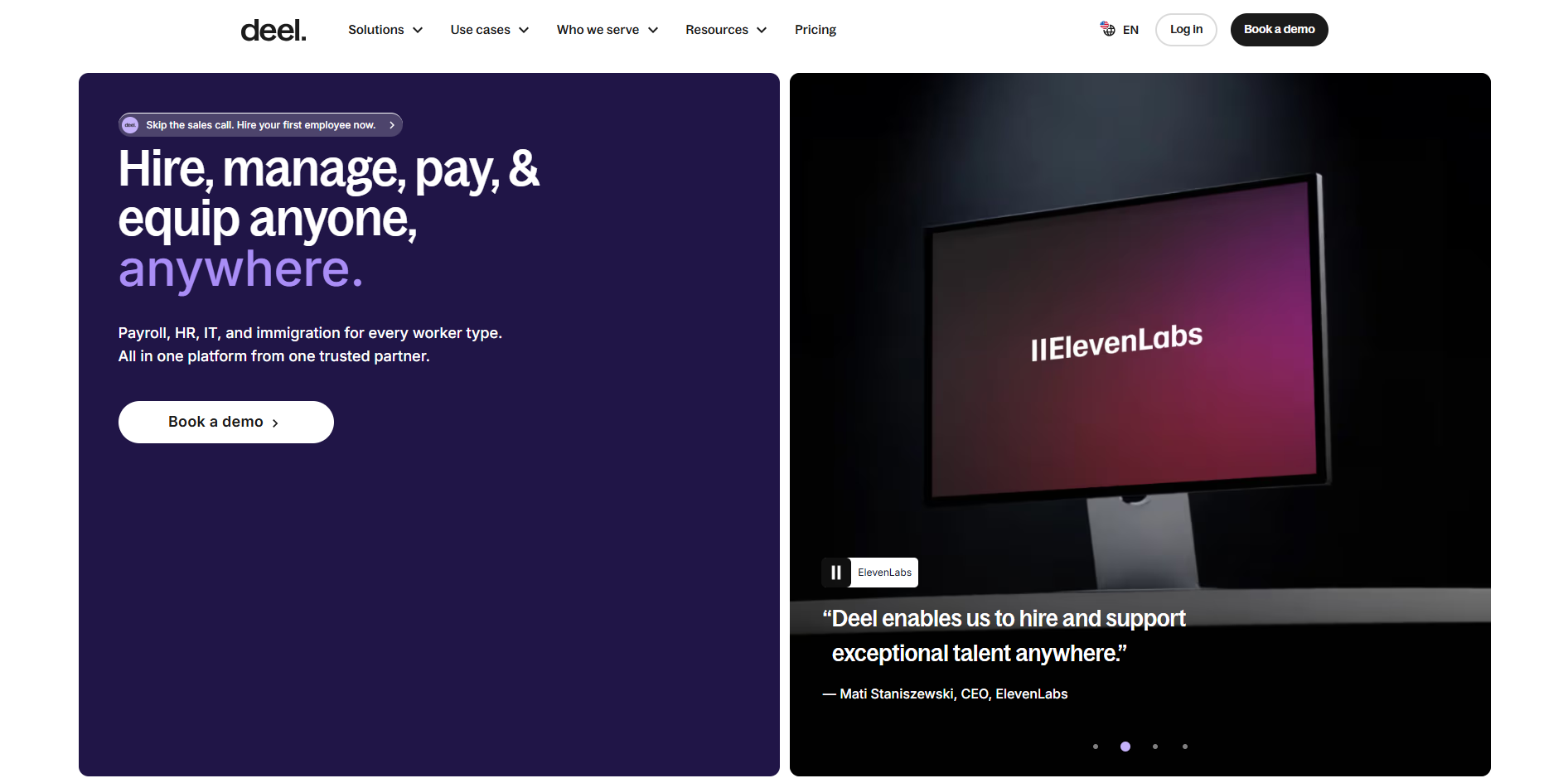
One of Deel’s major strengths is its owned-entity infrastructure. Instead of relying heavily on third-party local partners, Deel operates many of its own legal entities and payroll systems globally. This gives the company more direct control over payroll processing, compliance workflows, onboarding, and employee support.
The platform also includes:
- contractor management,
- global payroll,
- visa support,
- compliance monitoring,
- HR workflows,
- integrations,
- and automation tools for distributed teams.
What Is Oyster HR?
Oyster HR is another fast-growing Employer of Record platform focused primarily on helping remote-first businesses hire and manage international employees. Oyster positions itself as a simpler and more employee-centric platform, especially attractive to startups and smaller remote teams.
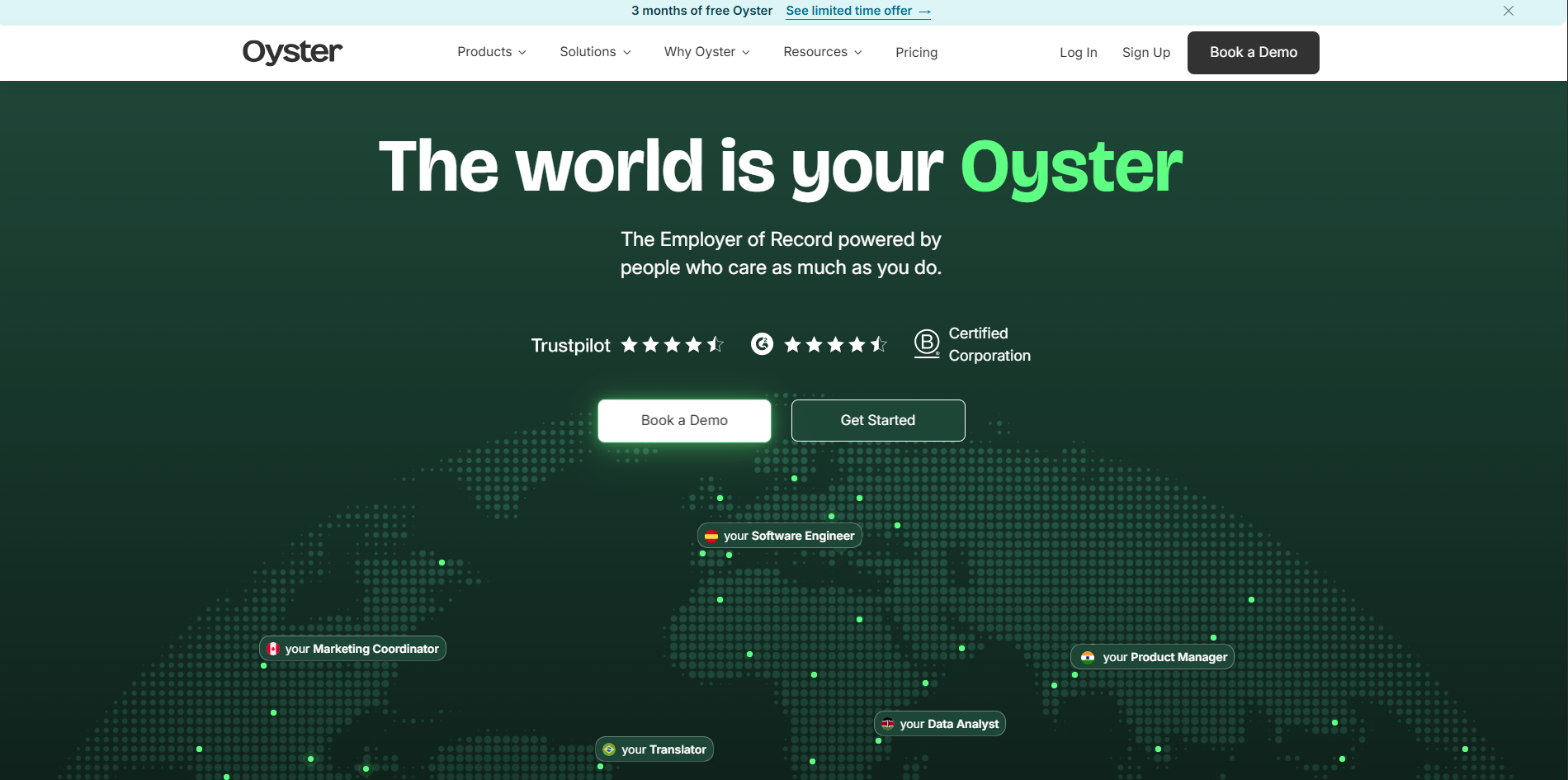
Unlike Deel, Oyster relies more heavily on local partner networks for payroll and compliance operations in many countries. This partner-based model allows Oyster to expand global coverage quickly, but it can also create limitations in support responsiveness, integration depth, and operational flexibility in certain regions.
Oyster HR focuses strongly on:
- streamlined onboarding,
- remote team management,
- localized hiring compliance,
- and distributed workforce support.
For companies hiring a smaller number of employees internationally, Oyster often feels simpler and easier to manage compared to more enterprise-heavy platforms.
Deel vs Oyster HR: Quick Comparison Table
| Feature | Deel | Oyster HR |
|---|---|---|
| Countries Supported | 150+ | 120–180+ |
| Contractor Management | Advanced | Moderate |
| Payroll Infrastructure | Mostly owned entities | Partner-based |
| Integrations | 120+ native integrations | Limited integrations |
| HR Tools | Extensive | Basic |
| API Access | Yes | Yes |
| Compliance Monitoring | Advanced AI-driven | Standard compliance workflows |
| Best For | Scaling global teams | Small remote-first businesses |
| EOR Pricing | Starting around $599/month | Around $699/month |
| Customer Support | 24/7 multilingual support | Limited support channels |
Pricing Comparison
Pricing is one of the biggest decision-making factors when comparing Employer of Record platforms.
Deel Pricing
Deel’s EOR services generally start around $599 per employee per month depending on country, contract structure, and additional services required. Contractor management pricing is typically lower and scales based on workforce size.
Deel’s pricing includes:
- payroll management,
- localized contracts,
- compliance support,
- tax handling,
- onboarding workflows,
- and global HR tools.
The company also offers additional modules for HR management, performance tracking, and immigration support.
Oyster HR Pricing
Oyster HR’s EOR pricing is often positioned around $699 per employee monthly, although actual quotes may vary by country and workforce size.
Oyster does offer simpler pricing structures in some cases, but several businesses report receiving custom pricing depending on hiring locations and operational complexity. Community discussions also suggest pricing flexibility during negotiations.
Which Platform Is More Cost Effective?
For startups hiring just a few remote employees, both platforms may initially feel expensive. Some small businesses on Reddit described EOR pricing across the industry as difficult to justify for tiny teams.
However, cost should not be viewed only as a monthly subscription fee. International compliance mistakes, payroll errors, contractor misclassification, or tax violations can become far more expensive than the EOR service itself.
Deel generally delivers more infrastructure, integrations, automation, and scalability for a similar or lower base price. Oyster, meanwhile, appeals more to businesses prioritizing simplicity over feature depth.
Payroll and Compliance
Global payroll compliance is where the real differences between these two platforms become clear.
Deel’s Compliance Infrastructure
Deel has invested heavily in compliance automation and legal infrastructure. The platform provides:
- localized employment contracts,
- tax filing support,
- worker classification tools,
- real-time compliance alerts,
- and AI-assisted regulatory monitoring.
Its owned-entity approach gives Deel stronger operational control in many regions. This becomes particularly valuable when labor laws change quickly or when companies hire across multiple jurisdictions simultaneously.
Deel also offers:
- contractor classification assistance,
- visa and immigration support,
- benefits administration,
- and payroll automation across multiple currencies.
For enterprises managing complex international operations, these capabilities significantly reduce compliance risk.
Oyster HR’s Compliance Model
Oyster HR also provides strong compliance support, especially for startups entering international hiring for the first time. The platform helps businesses:
- generate localized contracts,
- manage payroll taxes,
- onboard employees compliantly,
- and administer international benefits.
However, Oyster relies more heavily on third-party partners in many regions. While this model allows broad coverage, it may create additional layers between employers and local compliance teams.
For simpler hiring scenarios, this is rarely a major issue. But for companies operating across multiple high-regulation markets, Deel’s direct infrastructure can provide more operational confidence.
User Experience and Platform Design
Both platforms offer modern interfaces, but they target slightly different user types.
Deel User Experience
Deel’s dashboard is feature-rich and highly customizable. Businesses can manage:
- payroll,
- contracts,
- invoices,
- compliance,
- onboarding,
- and HR workflows from a centralized interface.
The downside is complexity. New users may initially find the platform overwhelming because Deel includes far more tools than many small teams actually need.
That said, once businesses scale internationally, Deel’s broader ecosystem becomes a major advantage.
Oyster HR User Experience
Oyster focuses more heavily on simplicity and employee experience. The onboarding process feels cleaner, less technical, and easier for non-HR teams to manage.
For founders hiring their first few remote employees, Oyster often feels less intimidating than Deel.
The tradeoff is flexibility. Advanced workflows, integrations, and automation capabilities are more limited compared to Deel’s enterprise-focused environment.
Integrations and Automation
This is another category where Deel clearly leads.
Deel Integrations
Deel supports over 120 native integrations with:
- BambooHR,
- Xero,
- QuickBooks,
- SAP SuccessFactors,
- Workday,
- Lever,
- and many other HR/accounting systems.
The platform also provides developer-friendly APIs and sandbox environments for testing integrations. This makes Deel attractive for larger organizations with custom workflows or complex HR stacks.
Oyster Integrations
Oyster supports fewer integrations overall and focuses mainly on essential HR workflows. The platform integrates with tools like BambooHR and QuickBooks, but its ecosystem remains significantly smaller.
For smaller teams, this may not matter much. But for larger businesses requiring advanced workflow automation, Deel’s integration capabilities are substantially stronger.
Contractor Management
Contractor management has become increasingly important as businesses shift toward distributed freelance workforces.
Deel’s Contractor Strength
Deel originally became popular because of its contractor infrastructure. The platform handles:
- contractor onboarding,
- tax documentation,
- global payments,
- localized agreements,
- and compliance workflows extremely well.
Businesses managing hybrid teams of employees and freelancers often prefer Deel because contractor management feels deeply integrated into the platform.
Oyster’s Contractor Features
Oyster supports contractor management too, but its focus remains more employee-centric. Companies hiring mostly full-time remote employees may not notice much difference, but contractor-heavy businesses typically benefit more from Deel’s mature contractor ecosystem.
Customer Support and Reliability
Customer support quality matters significantly when payroll or compliance issues arise internationally.
Deel Support
Deel offers:
- 24/7 multilingual support,
- AI-powered compliance assistance,
- onboarding guidance,
- and enterprise-level account management.
Several reviews highlight Deel’s responsiveness and ability to resolve complex international payroll issues quickly.
Oyster Support
Oyster’s support experience is generally positive for standard onboarding and HR questions, but some reviews mention slower response times for complex compliance situations.
Because Oyster depends more on local partners in some countries, escalation processes may occasionally involve additional coordination layers.
Pros and Cons
Deel Pros
- Extensive global coverage
- Advanced contractor management
- Strong payroll automation
- Powerful integrations
- Scalable for enterprises
- Owned infrastructure in many countries
- Strong compliance tooling
Deel Cons
- Can feel feature-heavy
- Learning curve for smaller teams
- Higher pricing for very small businesses
Oyster HR Pros
- Simpler onboarding
- Cleaner interface
- Employee-friendly workflows
- Good for startups and remote-first companies
- Strong focus on distributed teams
Oyster HR Cons
- Smaller integration ecosystem
- Heavy reliance on partners
- Less advanced contractor tooling
- Limited enterprise-level customization
Which Platform Is Better for Startups?
For early-stage startups hiring just a few remote employees, Oyster HR may feel easier to adopt initially. The platform’s cleaner workflows and simplified onboarding make international hiring less intimidating for smaller teams without dedicated HR departments.
However, startups planning rapid international scaling may eventually outgrow Oyster’s lighter infrastructure.
Deel requires slightly more onboarding effort upfront, but it scales more effectively as businesses expand into additional countries, manage contractors, or require deeper automation.
Which Platform Is Better for Enterprises?
For larger businesses managing distributed teams across multiple jurisdictions, Deel is usually the stronger option.
Its advantages include:
- owned compliance infrastructure,
- broader integrations,
- advanced payroll systems,
- contractor management,
- workflow automation,
- and enterprise scalability.
Oyster works well for simpler global hiring needs, but Deel is generally better suited for organizations with complex international workforce operations.
Final Verdict: Deel vs Oyster HR in 2026
Both Deel and Oyster HR are strong Employer of Record solutions, but they target slightly different audiences.
Oyster HR shines as a streamlined, startup-friendly platform focused on simplifying remote hiring and employee onboarding. It’s approachable, clean, and effective for smaller distributed teams entering international hiring for the first time.
Deel, on the other hand, delivers a more complete global workforce management ecosystem. Its deeper compliance infrastructure, advanced contractor management, extensive integrations, and enterprise-ready scalability make it the stronger long-term solution for rapidly growing international businesses.
If your company values simplicity and only plans moderate global hiring, Oyster HR is a solid choice.
But if you expect to scale internationally, manage contractors heavily, automate payroll workflows, and operate across multiple countries, Deel is the more powerful platform overall.